
Voice Method (draft)
♫ During 2023-24 I am writing up instructional materials for my vocal technique method.
Some of these materials will be freely available here and at
OneChoralVoice.ca
Goals & Aesthetics
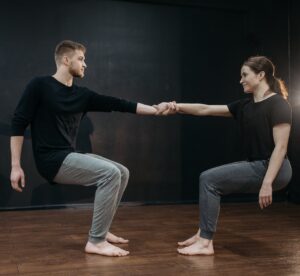
Technique for ensemble singers
♫ This method grew out of a desire to develop my voice as a healthy, pleasant, consistent solo and a cappella ensemble instrument, with timbre and genre versatility.
♫ The joy of singing in harmony is to feel our own voice blending with other voices and instruments, and to generate extra vibrations and qualities that are not available to any of us separately.
Why straight tone?
♫ It’s about physics. Only steady “straight tone” pitch is optimally suited to generating implied tones a.k.a. overtones and undertones.
♫ Implied tones are actually there.
♫ At times they may be in the audible pitch range. They are always tangible, the “buzz” we feel in our bones and brains when musical harmony and blend are really working. This is why we do harmony! (It’s an even better buzz when your body is part of the music!)
♫ Vibrato is not natural.
Vibrato is a cultural phenomenon. Most North American and Western European bodies have been formed by a life of chair-sitting. Even when we stand, our bodies think they are sitting! The resulted is a distorted relationship between larynx and lungs, causing a vibrato. When we realign our bodies vertically, lungs, larynx and pharynx resonance can be reunified in a single, relaxed straight tone instrument
(If you are interested in conventional 20th century Western technique — the kind that usually achieves power through an upthrust ribcage and wobbling larynx — many other coaches are available to assist you.)
Singing on the inside and the outside
♫ This is a method of singing that feels as good as it sounds and heals the voice as you sing rather than tiring it.
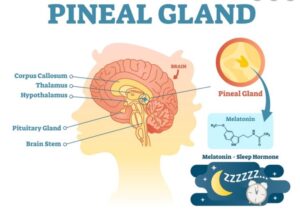
♫ Sending voice vibrations through the pituitary and pineal gland may support a sense of emotional and spiritual well-being. (No guarantees! Please don’t fire your therapist yet!)

Biomechanics
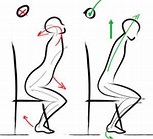
Forget “diaphragm support” ???

Alignment
♫ Before stretching body parts, we want to “stack” the vertebrae and blocks of the body vertically on top of each other.
♫ Support muscles are optimally and automatically engaged in a well-aligned body. This is also a way to increase physiological efficiency and reduce fatigue.
Before you stretch, align.
Breath support
When the body is well aligned, there is no need to push “in” on the upper abdominal muscles. The belly becomes part of the resonant vocal instrument, like the breastbone. Support is experienced as an energy flowing directly upwards from the lower abdomen, lower back, groin area and even up from the legs and feet.
♫ People who spend their days sitting in chairs tend to have an excess of lumbar spine curvature. This can disable the bottom of the lungs and the back of the diaphragm from doing their job properly and reflexively.
♫ Breath support does not require separate muscular action. It results automatically from proper use of the muscles that keep you standing and sitting up vertically.
Reducing jaw and neck tensions
Many facial, jaw and neck tensions result from the effort need to hold the head up on top of imperfectly stacked lower body “blocks.” Once the shoulders, hips and feet are aligned we may find that vocal instrument tensions simply vanish.
♫ After addressing whole body issues, we can also use targeted face, jaw, tongue and neck movements to minimize residual tensions.
♫ The Lion, the Witch and the Scream
[Sign up for mailings on voice technique and receive a FREE description of my favourite face stretches for singers.]
Resonance
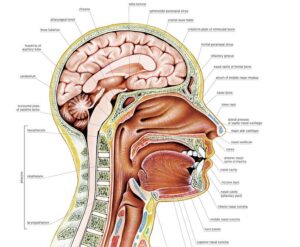
& Refinement

♫ Sing ABOVE the palate.
♫ You may have heard about lifting the palate to expand vocal space. However doing this is more likely to block the upper resonance spaces of the voice.
♫ Palate lifting blocks resonance.
A better answer is to engage resonance right inside the tissues of hard and soft palate, AND into the spaces behind and above the palate — the nasopharynx and nasal conchae. All of these body parts can function as resonators to expand the vocal instrument.
♫ Liquescents help build resonance
♫ Before we sing out, we sing into the vocal instrument.
♫ A liquescent is any held consonant with pitch.
♫ Liquescents are a shortcut for helping you experience voice vibrations inside new and different parts of the instrument.
♫ My portfolio of liquescents and “rasps” has grown and shifted over the years, following my own needs and the needs of my students. Wherever there is an area of stagnancy, a place in the body that is not resonating, we try to find a spoken language phoneme to reengage that part of the vocal instrument. My current favourites are “L” and a nose-snorted laugh.
♫ Timbre
♫ What makes a pleasing vocal timbre? In general, voice timbre flaws indicate places in the vocal body where sound vibrations are not being allowed to flow freely.
♫ Of course cultural standards of beauty differ. For instance, a country “twang” can be generated by tightening the centre of tongue so that it does not resonate freely.
♫ Accuracy
♫ Have you ever been instructed to sing a brighter timbre or vowel to avoid going flat? Actually, pitch or tuning, and timbre flexibility are two entirely separate things.
♫ Separate pitch from timbre.
♫ Each student has to find their own “pitcholator,” the dial they can turn inside their instrument to raise and lower pitch. A good goal is to make tuning entirely independent of brightness/darkness i.e. the timbre or colour of a sound.
♫ Similarly, you can also work to visualize and develop a better “timbrelizer,” a dial or a set of dials by which you would modify timbre and vowel colour continuously, with constant pitch and accuracy.
♫ Range expansion
♫ Many choral or hobbyist singers take lessons with the goal of reaching higher notes, or restoring the high notes they once had. Or if you are a baritone or contraltenor, perhaps your goal is stronger and more resonant lower notes.
♫ In my experience, working on resonance is the most efficient path to vocal range expansion. Yes, really. If you want to grow your range, a better strategy is to work with your best octave-and-a-half or octave (or even less) of really resonant sounds.
♫ Here is why: Each time you allow the instrument to resonate really well, your body is also generating octave, 12th, (and so on) partials below and above those notes. The partials teach your body how it feels to make a broader range of wavelengths. Eventually they will lay a basis for sustaining fundamentals at those broader pitch ranges.
[LInk: Are you a soprano or an alto personality?]
♫ Each time we work with resonance, we are also working on range.
Musicianship
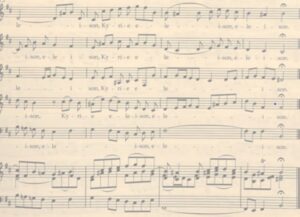
Metre and Rhythm
♫ Understanding metre gives you an enhanced sense of how music works and makes you a better team player.
Phrasing for vocalists
♫ It’s as much about the words as the melody. But it’s also about the melody!
Ensemble Skills
Your voice is a part of your body and self. Therefore, blending with other people’s voices can feel like a kind of physical contact.
What is vocal blend?
[Link to article.]
Learning songs
♫ A song is usually made up of words (vowels, liquescents, hisses, percussive consonants, dialect decisions), melody (pitches, rhythms, phrasing), dynamics and other musical elements. And then there is expression!